McKesson
UX design for McKesson's B2B generic-drug platform, covering product recommendations, backorder communication, and cross-team journey mapping.
Client
McKesson Corporation
Year
2025

Context
McKesson is one of the world's largest healthcare distributors. I joined through Randstad Digital, inside the B2B e-commerce team that sells generic drugs to pharmacies and care providers.
The work covered four connected areas: product recommendations, backorder and omit communication, search for generic campaigns, and internal finance tooling.
The Problem
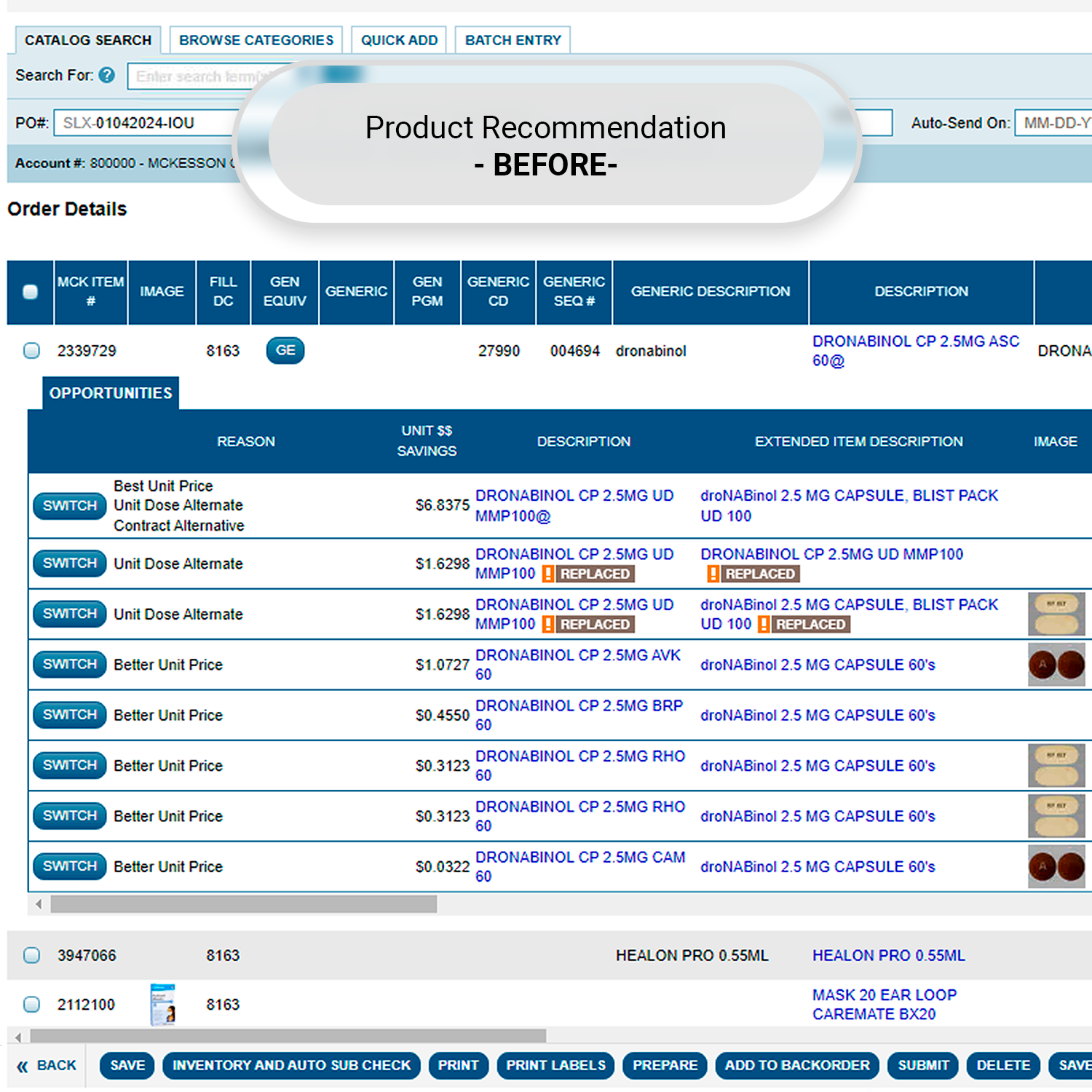
Buying generic drugs is high-volume and high-stakes. Buyers need to find the right generic fast, understand why something isn't available, and act on backorders before they become emergency orders. The old experience made all three harder: recommendations were hard to read, omit reasons were hidden, and there was no live view of backorder status.
Team
UX Designer (me), UX Research, UI Design Systems, Designer Team Lead - interacting with Data Science, Developer, and Business Teams
Processes
Discovery & Alignment
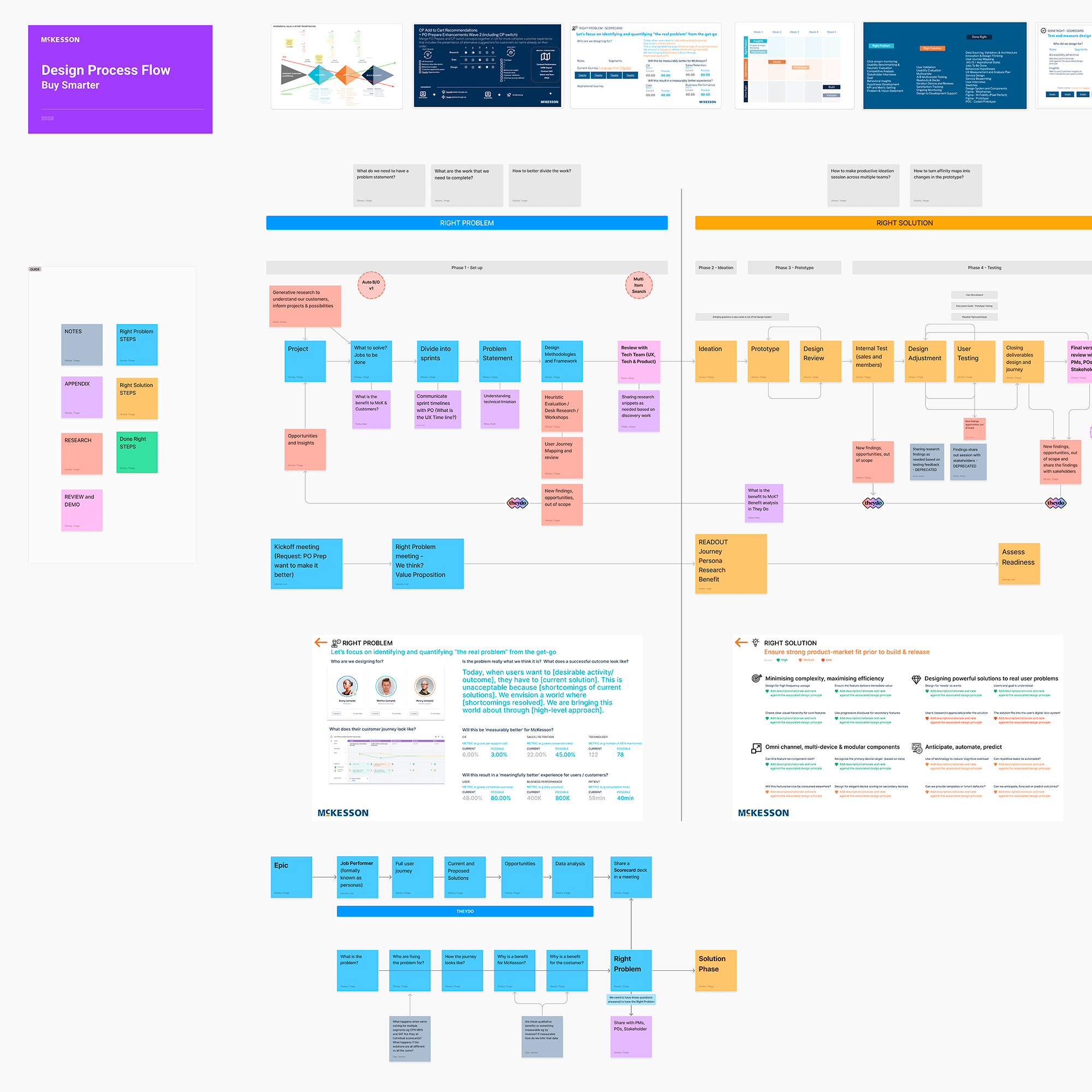
Ran workshops with stakeholders to map how the work really happened and where it broke. Looked at leading B2B platforms to see how others handle buying in regulated markets.
Research & Journey Mapping
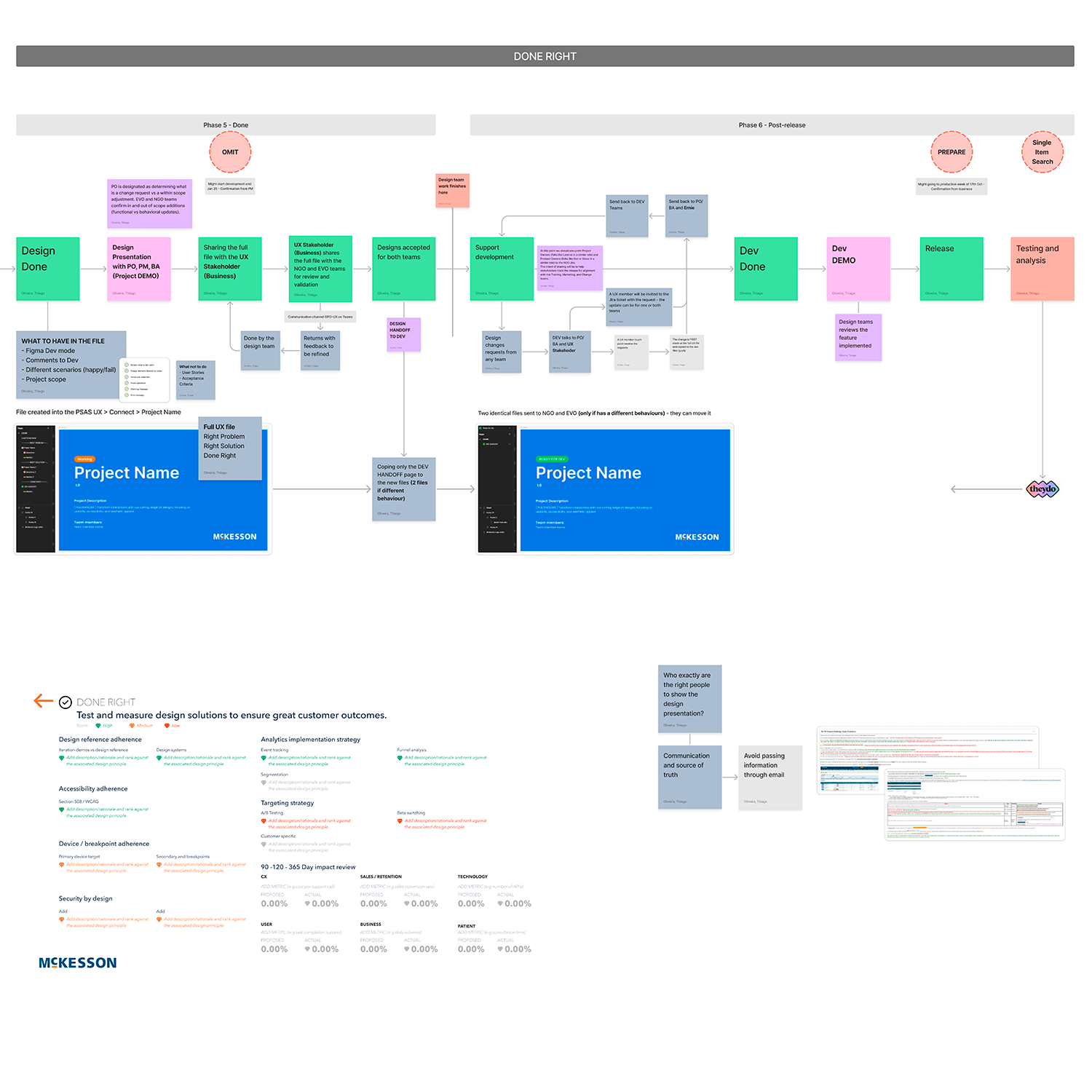
Co-led 15+ interviews across sales, operations, and finance. Turned what I found into journey maps that marked the exact points where the experience failed — and used them to get product, engineering, and compliance looking at the same problems.
Design & Validation
Designed in Figma, from wireframes to high-fidelity screens. Tested with real users to make dense, data-heavy screens easier to read and act on.
Handoff & System Contribution
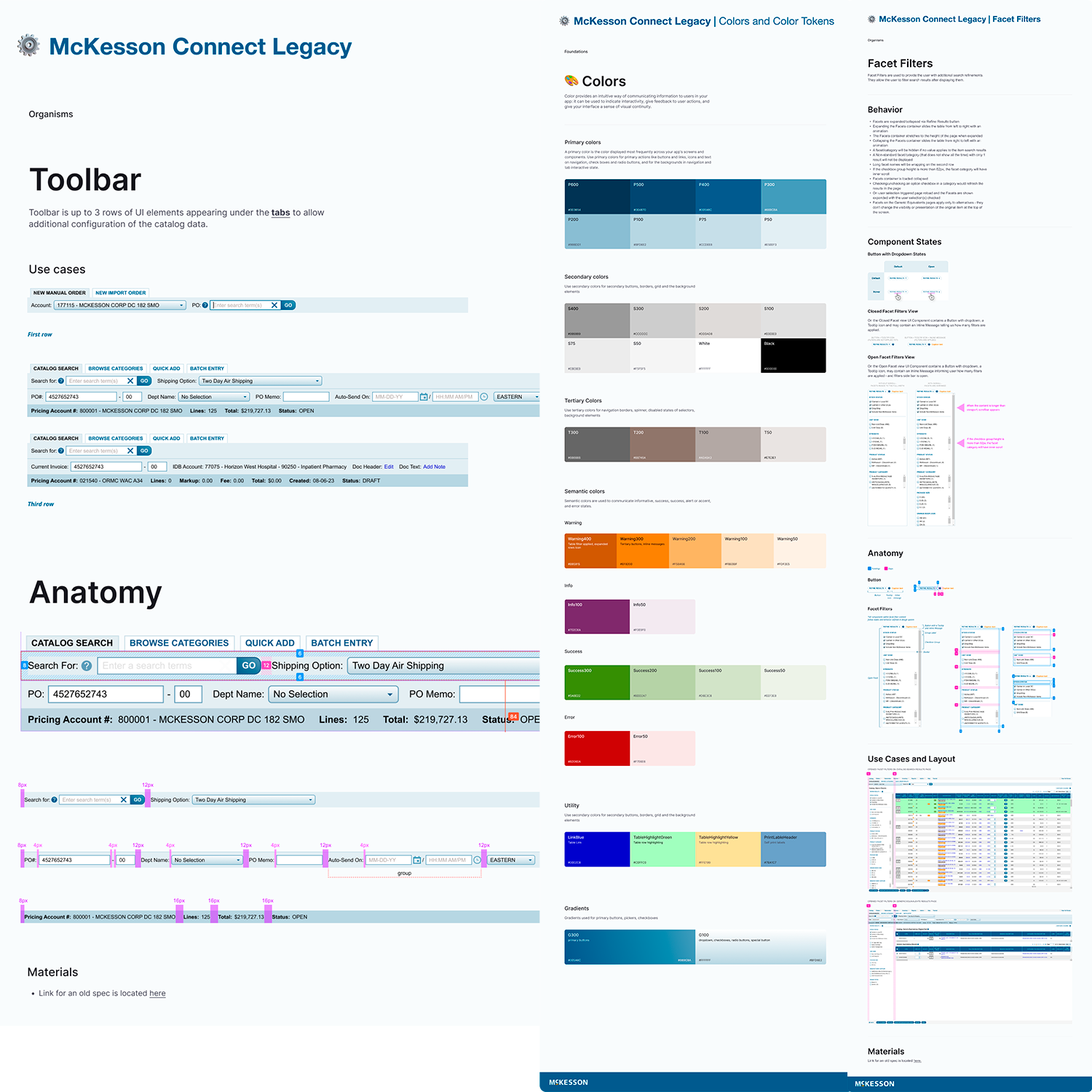
Added 3 reusable components and documented 5 patterns in McKesson's shared design system — so later work across teams started from something, not from zero.
Workstreams
1. Product Recommendation
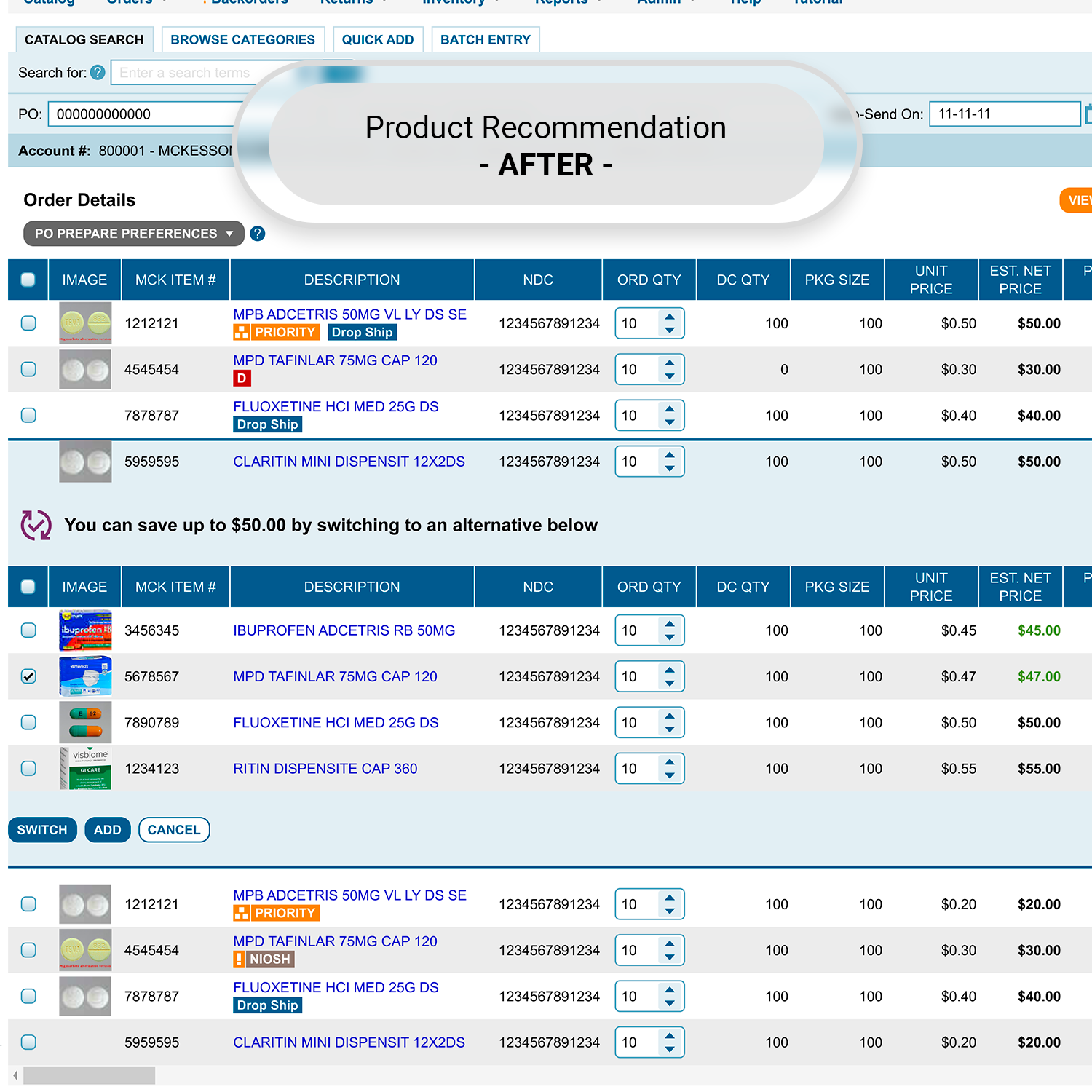
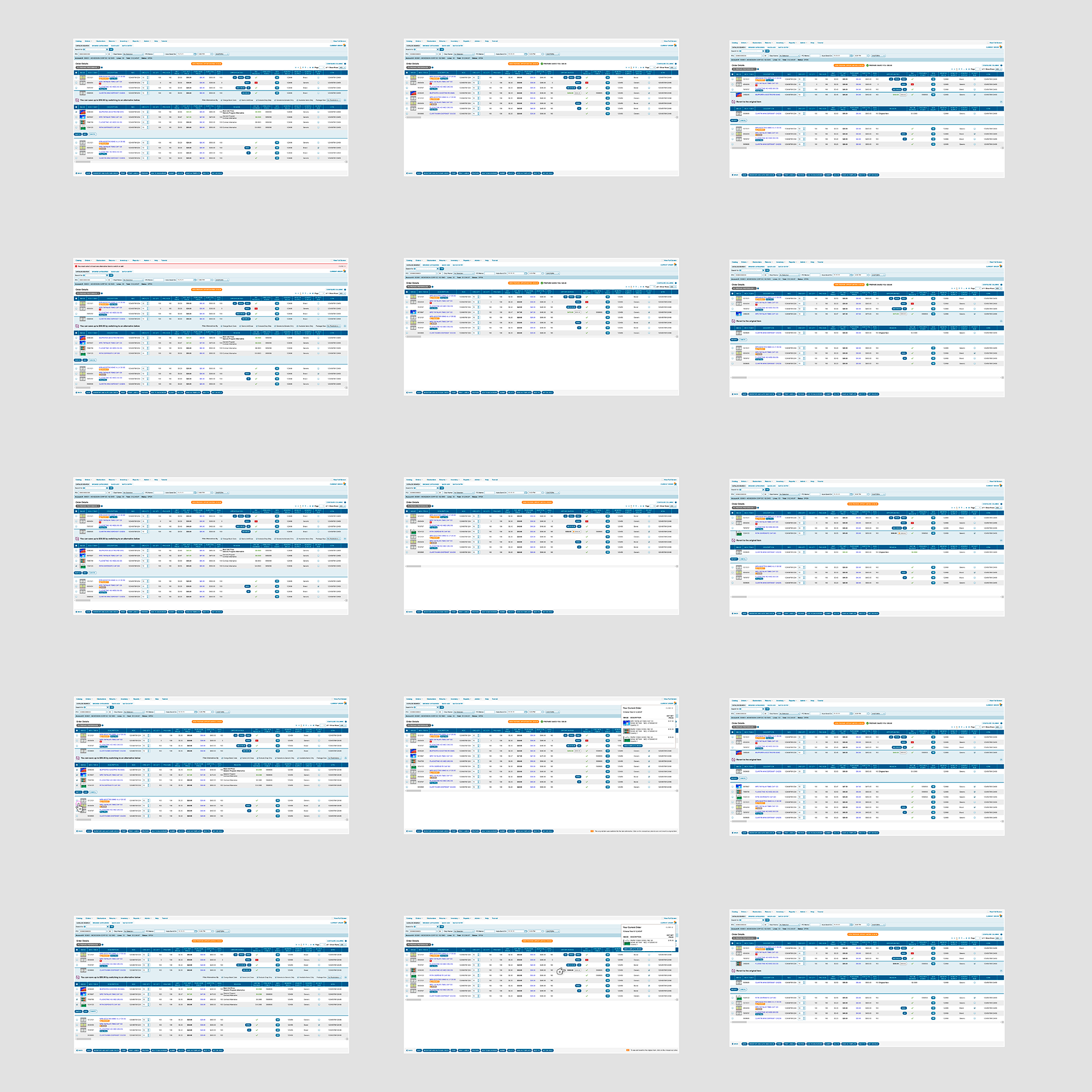
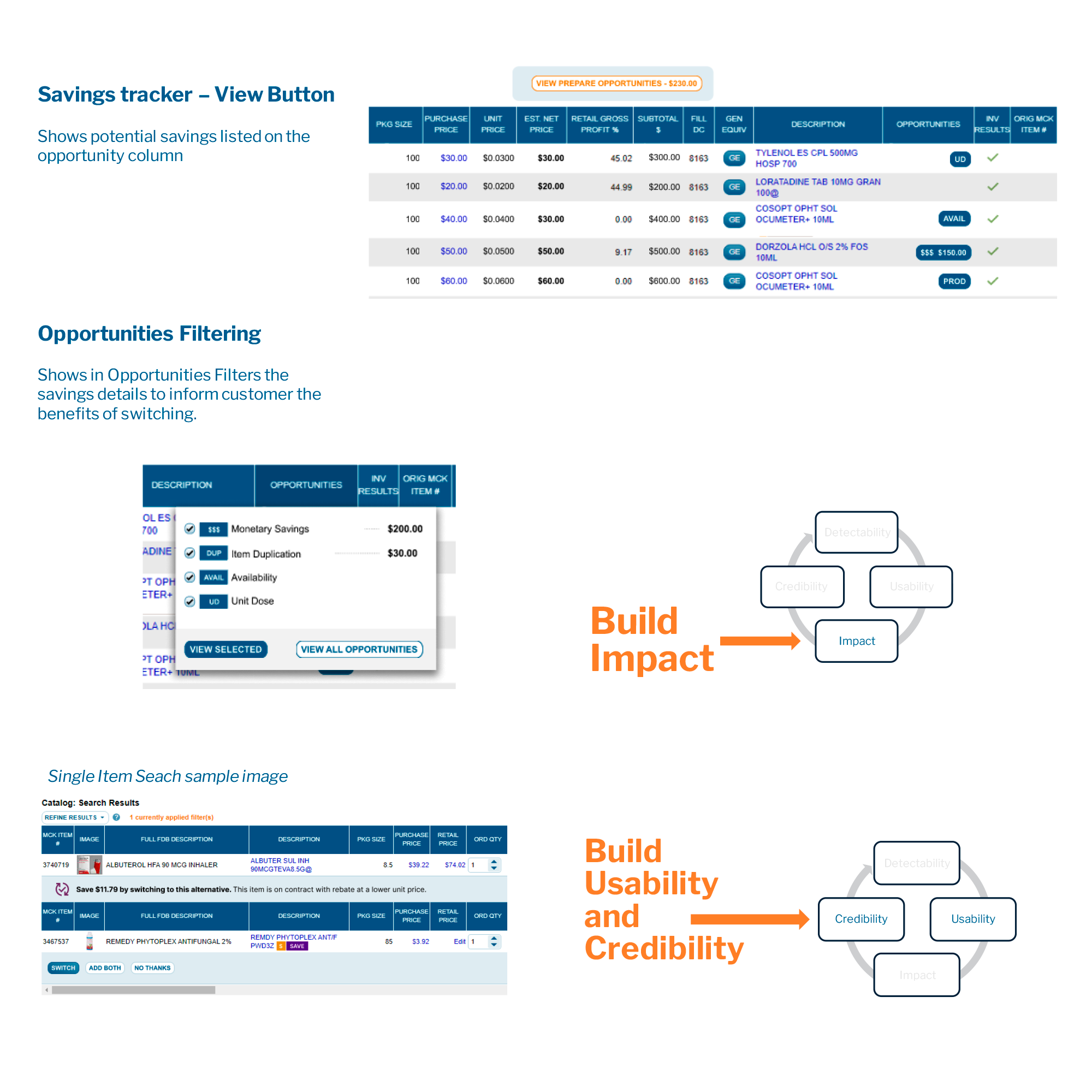
The tool showed every option with equal weight, so buyers couldn't read it fast and ordered by hand instead. I made one clear saving the focus, aligned items for easy comparison, and surfaced two actions, switch to a cheaper item, or add more. Clients confirmed this led to larger orders.
2. Omits Communication & Backorder Watch List
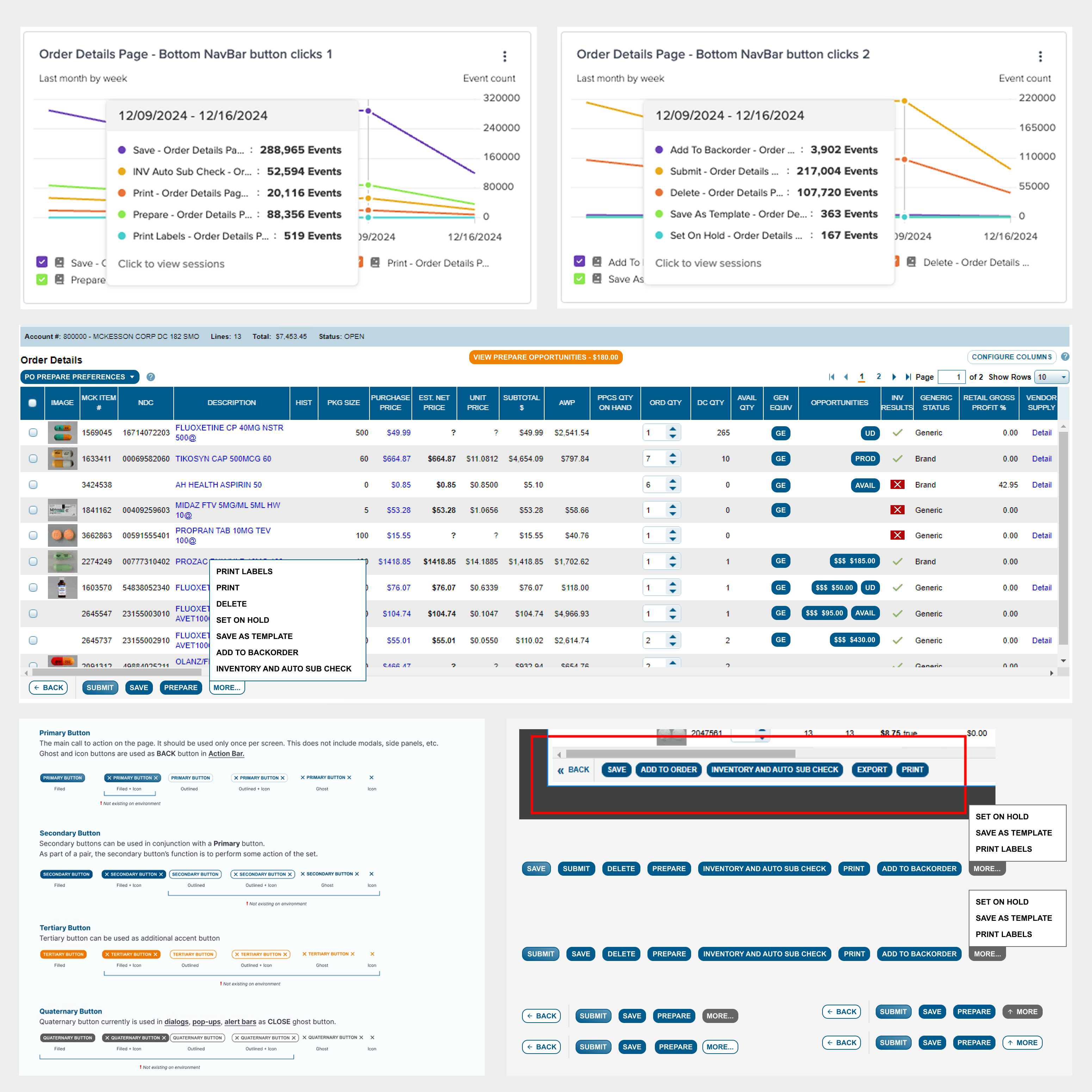
Built a real-time Backorder Watch dashboard, and an Omit Reason feature that shows why an item was left out of recommendations, turning silent system behaviour into something buyers could understand and trust.
3. Single & Multi-Item Search — Generic Campaigns
Usability improvements to search flows for generic drug campaigns, improving task success rate and reducing time-to-complete across conversion journeys.
4. MT Finance — Stakeholder Research & Journey Mapping
Co-mapped internal budgeting journeys across 4 departments. Uncovered 10 process improvement opportunities. Proposed streamlined workflows estimated to save 15 hours/week in coordination overhead. — Full case study on McK Budget Process
Impact
- 15+ stakeholder interviews conducted across sales, operations, and finance
- 10 process improvement opportunities identified in MT Finance budgeting workflows
- 15 hours/week estimated reduction in coordination overhead from proposed workflow changes
- Real-time Backorder Watch dashboard introduced — reducing emergency order escalations
- Omit Reason feature improved user trust and reduced support ticket volume
- 3 components + 5 usage patterns added to the shared design system
Key Learnings
Transparency is a feature
Showing users why an item was omitted or back-ordered — rather than just surfacing the outcome — changed the interaction from frustrating to trustworthy. In regulated procurement, confidence in the system is as important as speed.
Data density requires design discipline
Generic drug recommendation cards needed to be information-rich without being overwhelming. The design challenge wasn't adding data — it was deciding what to surface, in what order, at what moment.
UX in large organisations is a systems problem
Contributing to a shared design system isn't housekeeping — it's how design impact scales beyond the feature you're currently working on.
Videos
Have a similar challenge?
Let's talk →