Navego
Services marketplace connecting Brazilian immigrants in Portugal with verified providers — built solo from zero to launch, with full ownership across UX, product, frontend, backend, and SEO.

Context
The Brazilian community in Portugal is one of the fastest-growing in Europe. But arriving and settling remains a chaotic, solitary process — documentation, services, housing, healthcare — all navigated through Facebook groups, word-of-mouth recommendations, and unverified providers with no quality guarantee.
Navego was built to solve that. A services marketplace connecting Brazilian immigrants in Portugal with verified providers — with practical immigration content integrated into the same platform.
Problem
No centralised platform existed that combined a services marketplace, a verified provider directory, and educational immigration content — designed specifically for people who are just arriving.
What existed was noise: Facebook groups with thousands of members, recommendations without context, providers without verification. Trust was the missing layer. Not just a feature to add — the entire product had to be built around it.
How can I find an accountant who understands my situation as an immigrant, in Portuguese, without having to dig through Facebook groups?
Process
The project started with community research — qualitative interviews, analysis of immigration groups, and competitive benchmarking — to map the main friction points in the settlement journey.
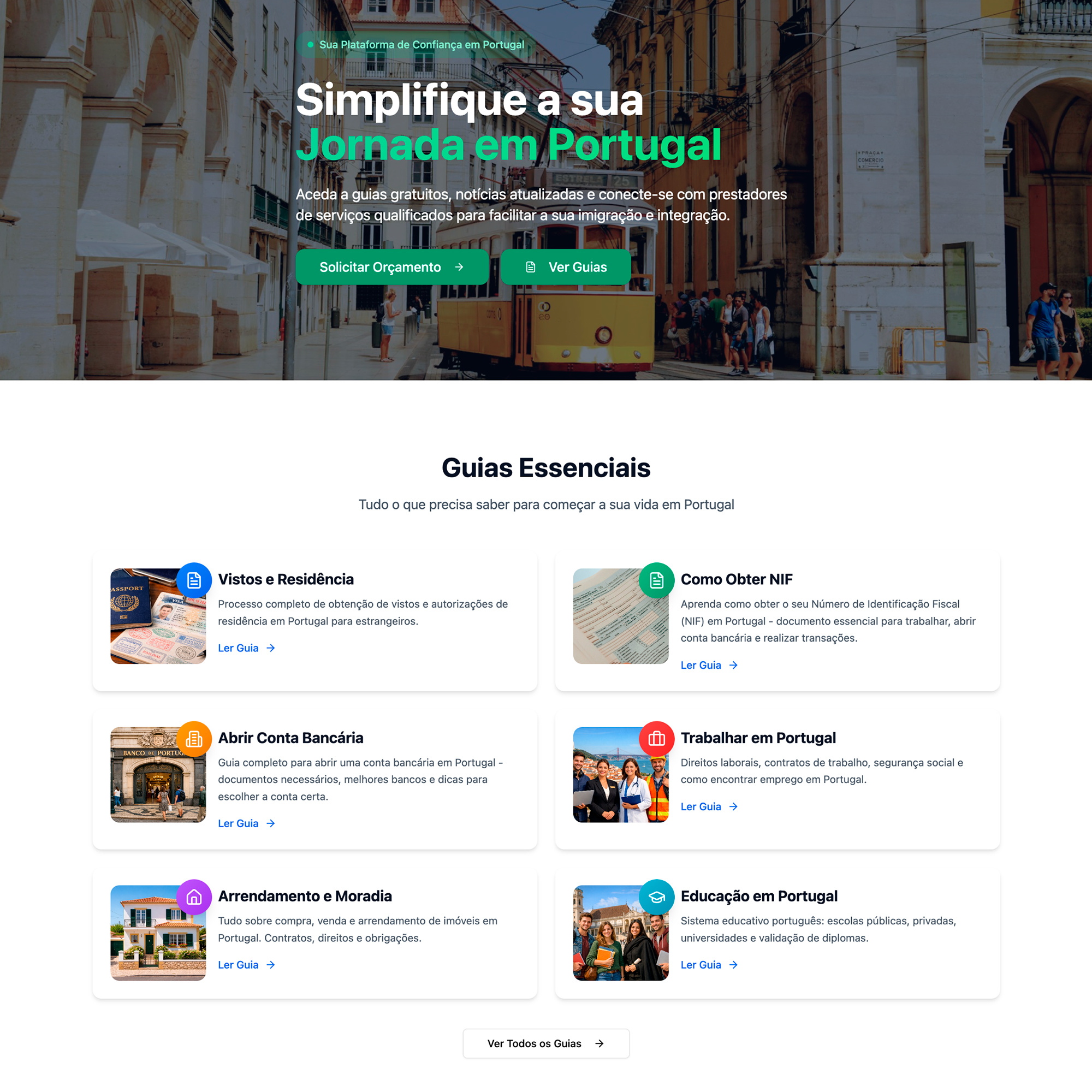
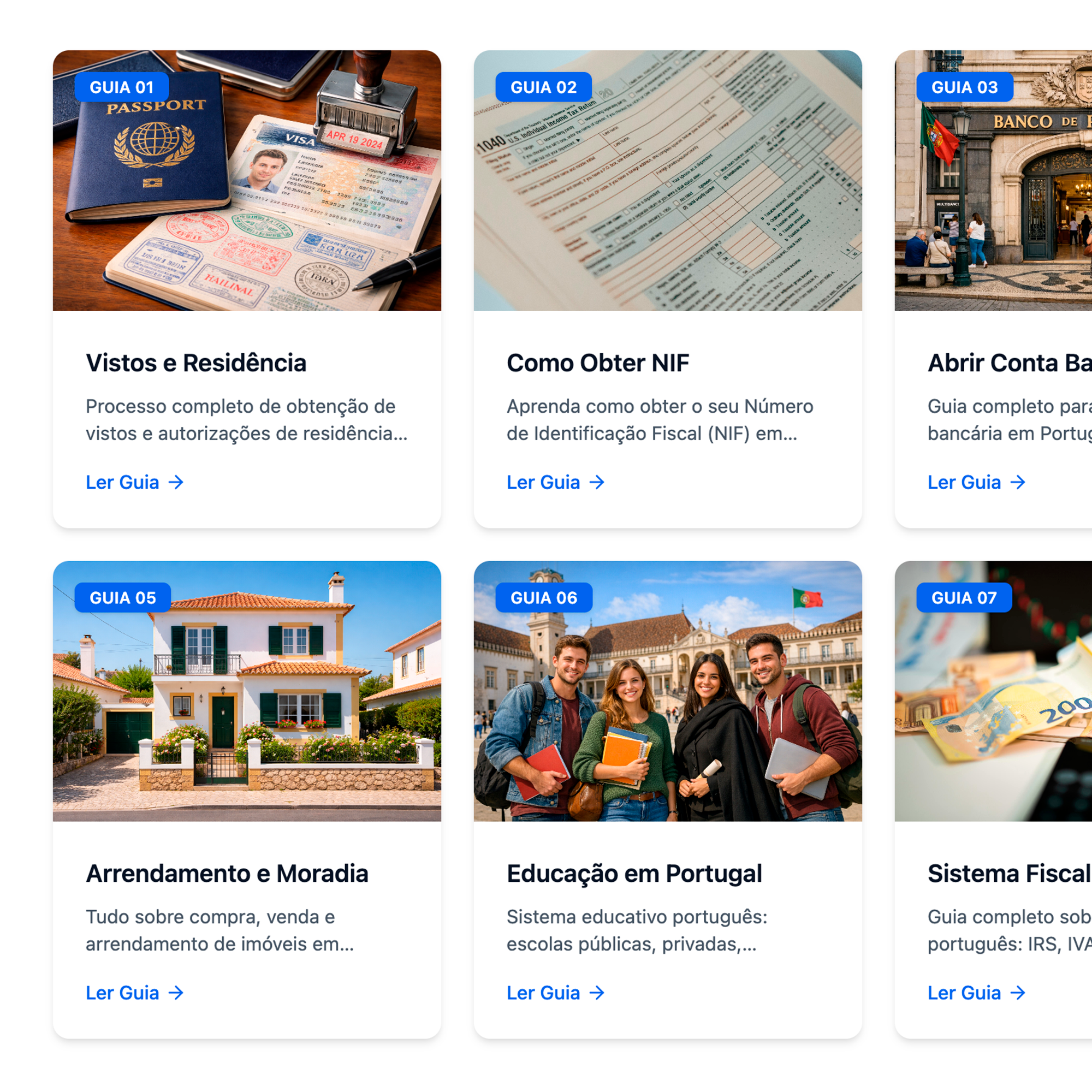
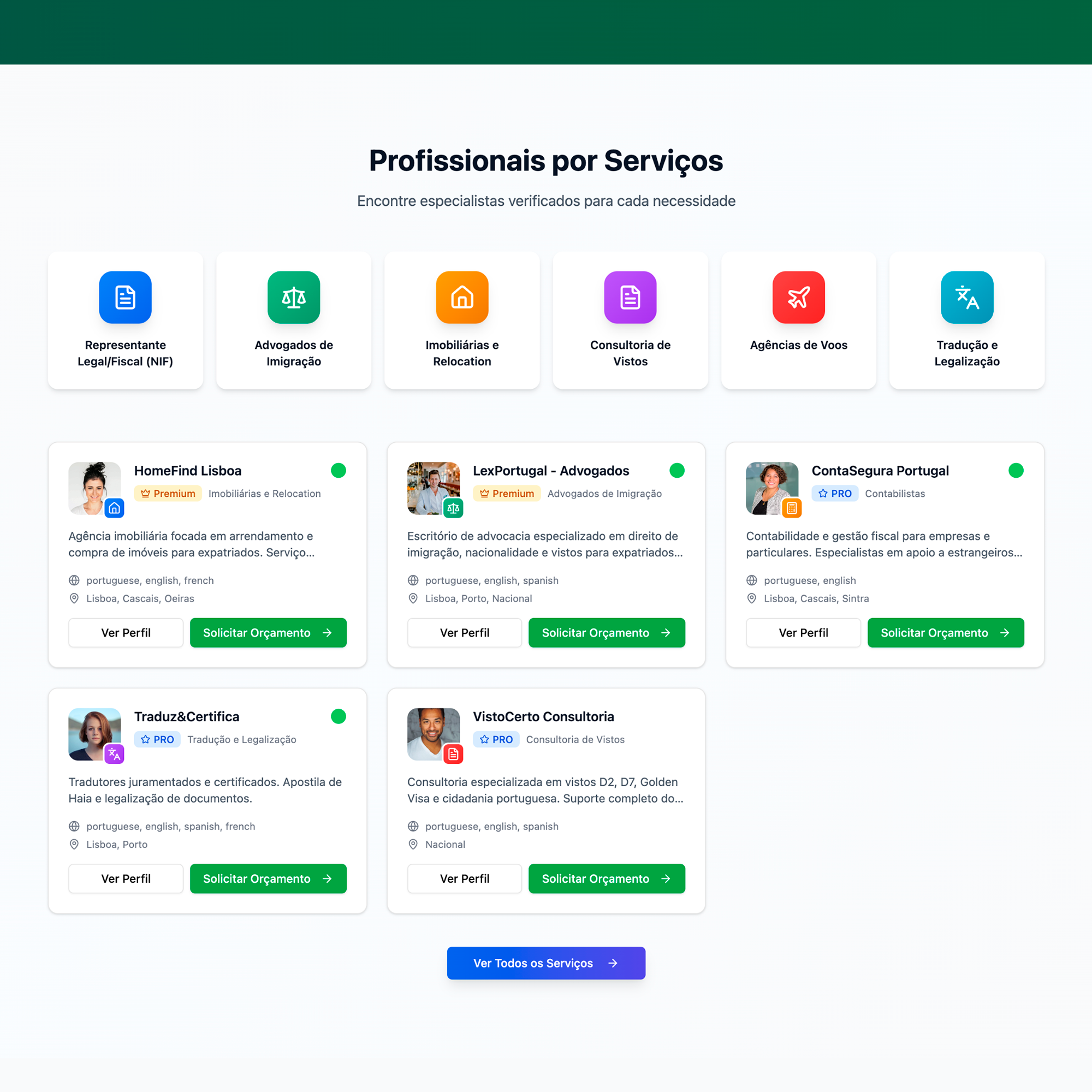
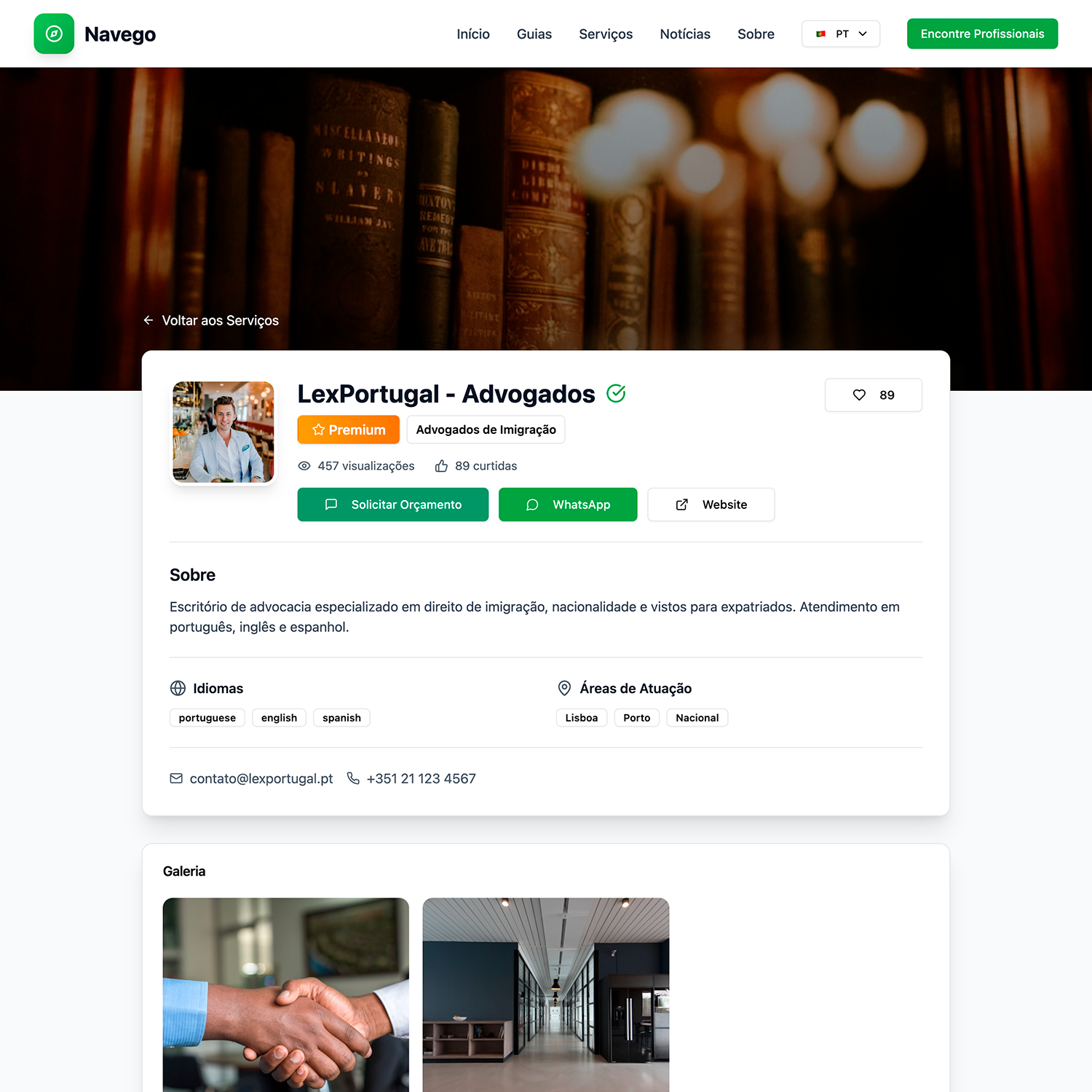
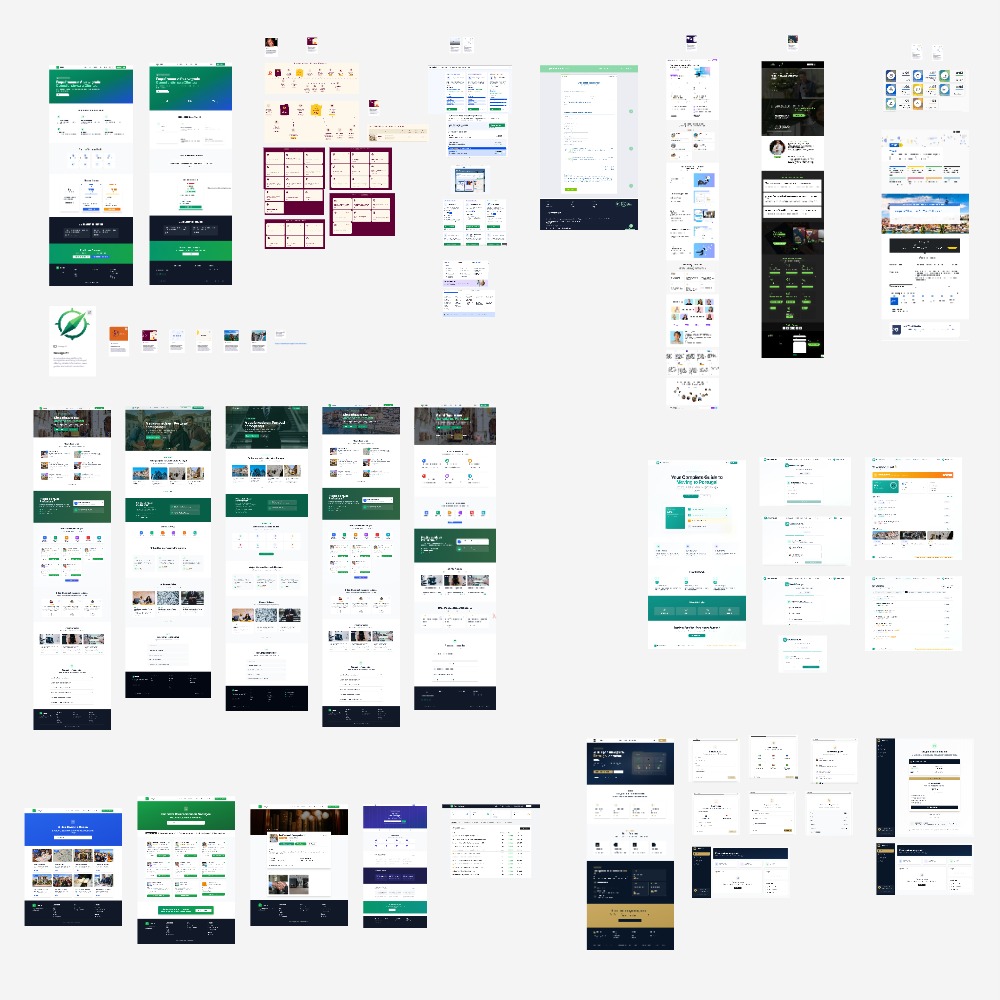
The architecture was designed in three complementary layers: a content portal with practical immigration guides, a provider directory by category with verification filters, and a quote-request system with no registration barrier for users.
UX & Product
Research, Information Architecture, and a design system built with colour tokens and typography. Wireframes and progressive onboarding flows for providers — registration was intentionally simplified to maximise conversion. Full onboarding completes in 3 steps after account activation.
The freemium business model allows any user to access content and request quotes without registering, while providers subscribe to monthly plans (Basic, PRO, Premium) with progressive features.
Development - Frontend, Backend & SEO
Admin panel built with Filament. Freemium plan management with per-provider overrides. RBAC with Spatie Permission for granular access control across a multi-tenant system.
Structured JSON-LD (WebPage, FAQPage, Service) for organic visibility from day one. HTML guide import system via Filament, with content generated in isolated sessions — allowing the content portal to scale asynchronously without blocking the product development cycle.
Stack used for Backend Laravel 12 PHP 8.3 · Database PostgreSQL · Frontend Blade, Tailwind CSS, Alpine.js, Livewire 3 · Admin Panel Filament 3 · Auth & Permissions Spatie Laravel Permission · Version Control GIthub · Deploy Laravel Forge → Hetzner · SEO JSON-LD — WebPage, FAQPage, Service, LocalBusiness, Article
Impact
The landing page is live in active production, and with the MVP in ongoing development.
- 4 actors with distinct roles and access levels — Visitor, User, Provider, Admin
- 8 user flows documented end-to-end — from anonymous quote requests to provider approval and content publishing
- 8 service categories confirmed and seeded
- 9 immigration guides planned — NIF, banking, NISS, school enrolment, IRS, housing, driving licence, and health system
- 28 business rules covering subscription plans, quote limits, visibility, SEO, and analytics
- ~20 database tables across users, providers, subscriptions, quotes, analytics, and content
The product goes beyond a simple directory — it is a trust infrastructure for a community that historically relied on informal, unverified networks.
The separation between content generation and platform development — guides created in isolated sessions and imported via Filament — allows the content portal to scale independently without blocking the product cycle.
From a technical standpoint, Navego demonstrates full ownership of a multi-tenant SaaS product: permission architecture, subscription model, SEO with structured data, and a consistent design system built from scratch.
Key Learnings
Trust is the product
In a community that runs on informal recommendation, design must communicate verification and credibility before it communicates features. Every decision — from the badge system to the onboarding flow — was evaluated against one question: does this make the user trust more or less?
Progressive onboarding reduces abandonment
Requiring full registration before delivering any value is the fastest way to lose users. The 3-step post-activation flow was a deliberate product decision, not a technical shortcut.
Building solo forces real prioritisation
Every feature had to justify its weight against conversion, trust, and maintenance cost. There was no room for nice-to-haves — only decisions that moved the product forward.
SEO is product strategy, not a post-launch checkbox
Designing JSON-LD schemas alongside the data model changed how every public-facing entity was conceived. Structure and discoverability were built in from the start.
AI as a structured collaborator
Spec before code — each prompt had a defined scope, a verification checkpoint, and documented outputs. The most expensive mistakes came from building without documented flows. The shift to writing system specifications before prompting or coding reduced rework and made every decision traceable.
Have a similar challenge?
Let's talk →